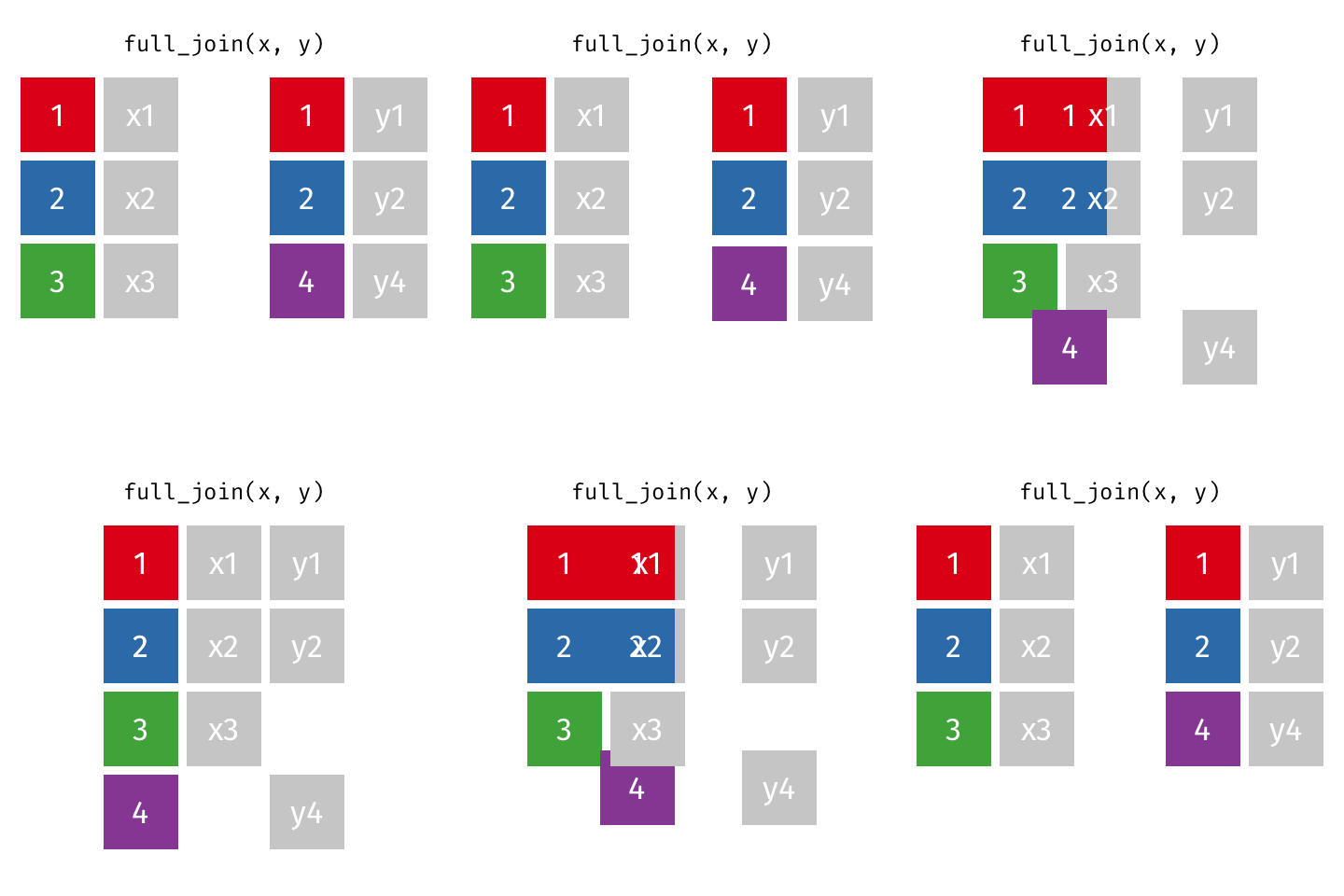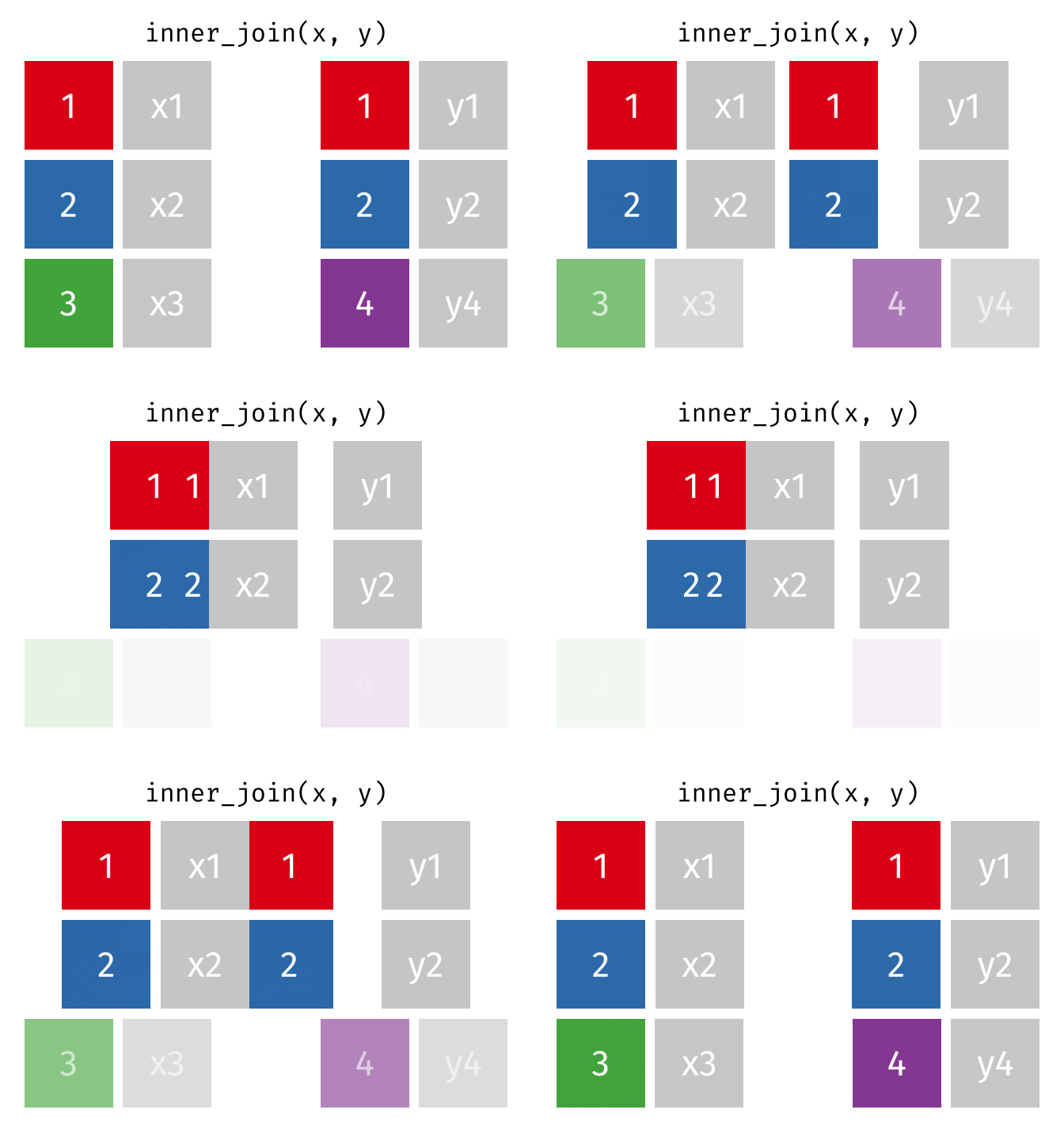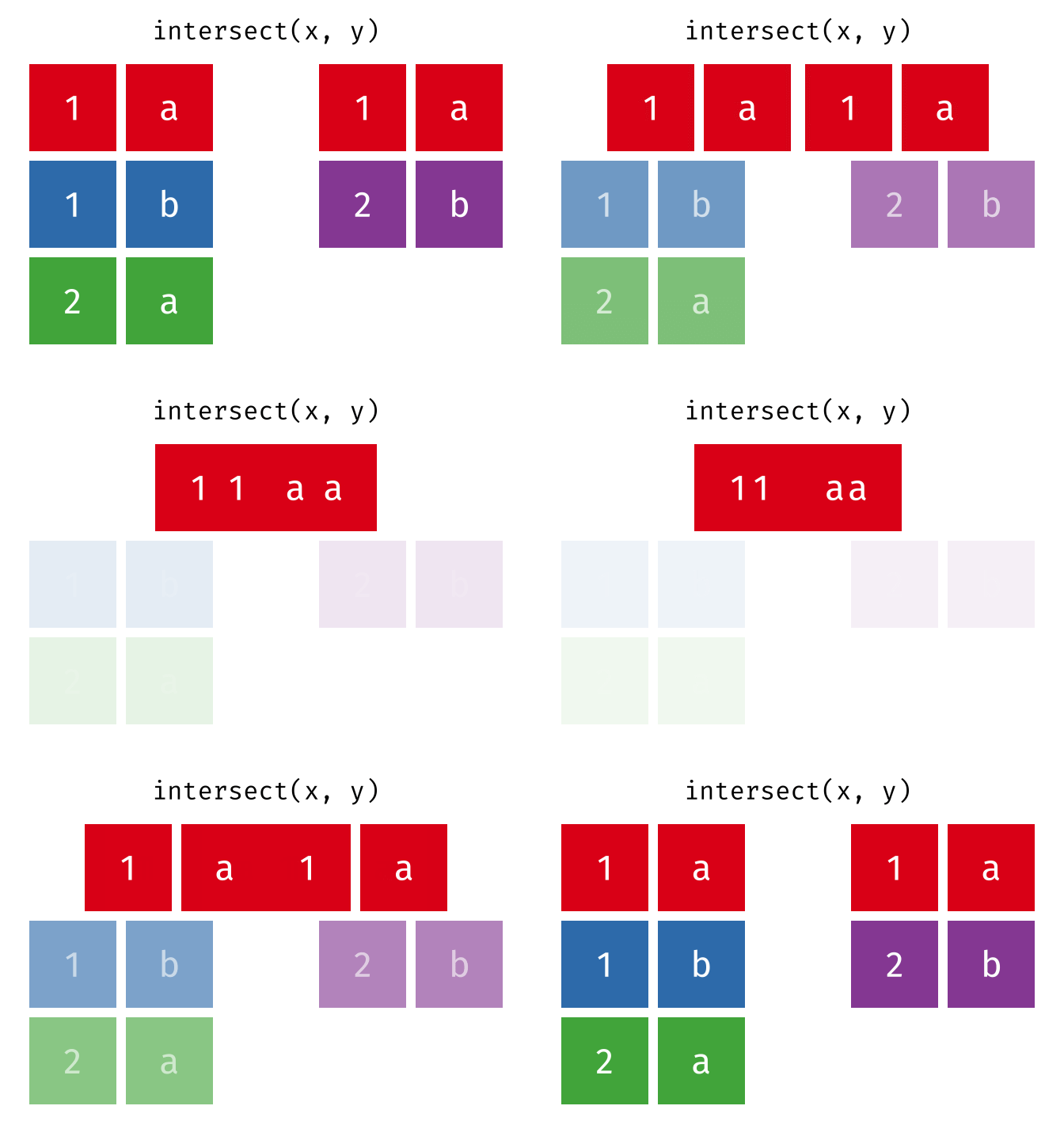
Joining two datasets

STAT1003 – Statistical Techniques

Dr. Emi Tanaka

Australian National University

These slides are best viewed on a modern browser like Google Chrome on a desktop or laptop. Some interactive components may require some time to fully load.

Relational model

  • A relational model organizes data into one or more tables of columns and rows, with a unique key identifying each row based on Codd (1969, 1970).
  • Generally, each table represents one entity type.
  • Relational database is a database based on the relational model of data.
Type Tidy data Relational model
variable column attribute/field
observation row tuple/record


Primary key

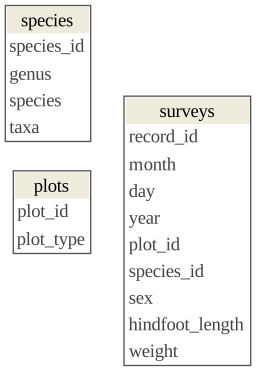
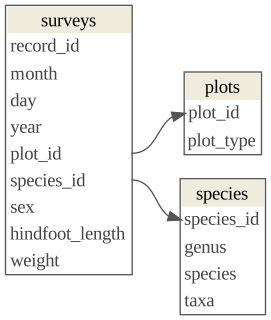
  • A primary key (sometimes called candidate key) is the smallest subset of columns that uniquely identifies each row in a table. E.g.
    • species_id is the primary key in the species table,
    • plot_id is the primary key in the plots table, and
    • record_id is the primary key in the surveys table.

Simple key & Compound key

  • If only a single column then it is called a simple key.
  • If a key consists of more than one column then it is called a compound key.
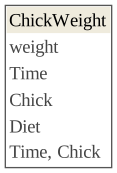
    • E.g. ChickWeight has a compound key consisting of Time and Chick.
  • A table can also have no key (violating the relational model).
    • E.g. chickwts has no key.

Foreign key

  • A foreign key is a column in one table that uniquely identifies a row in another table.
  • plot_id and species_id are foreign keys in the surveys table, which link to the plots and species tables, respectively.
  • There are no foreign keys in the plots and species tables.

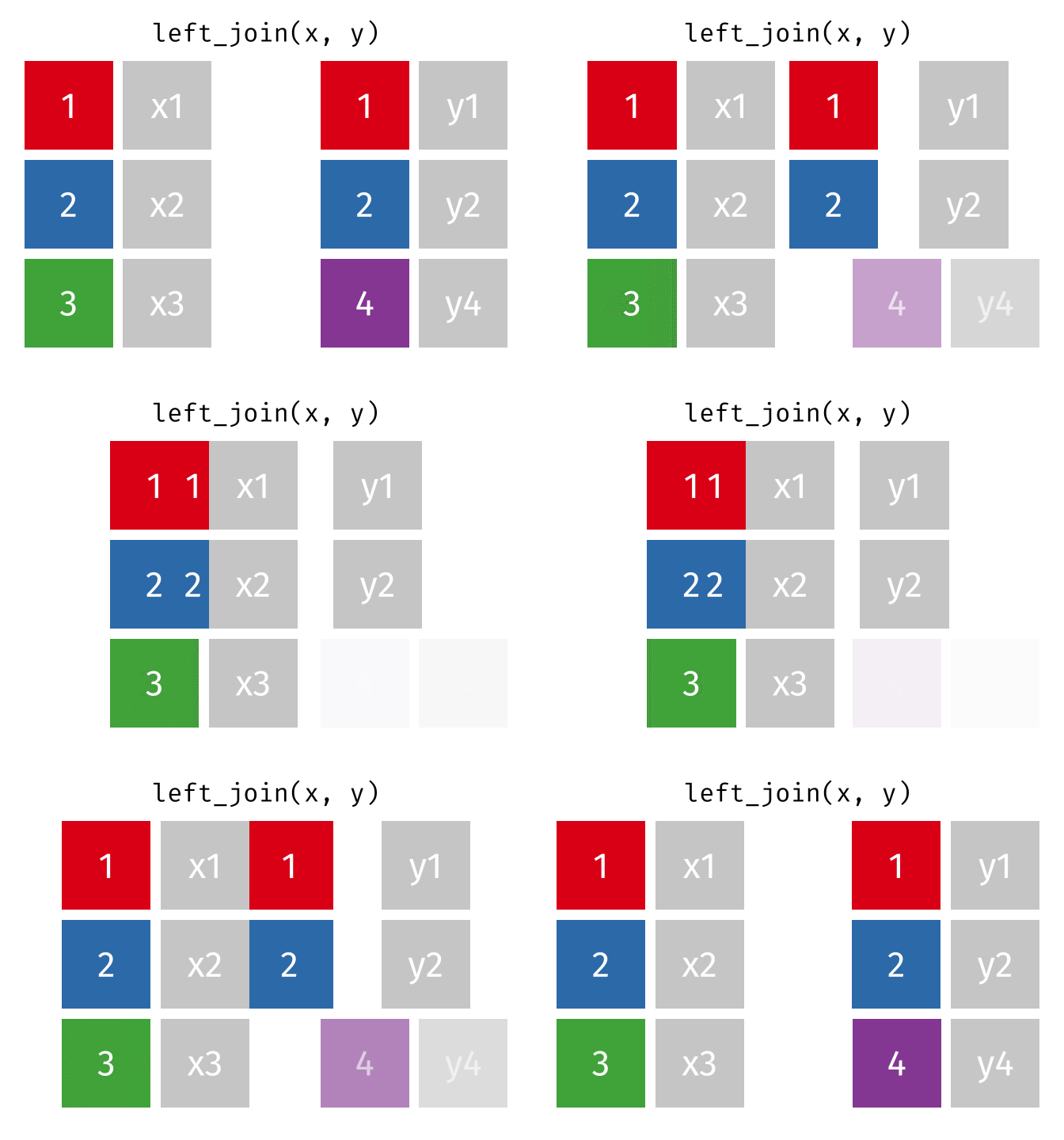
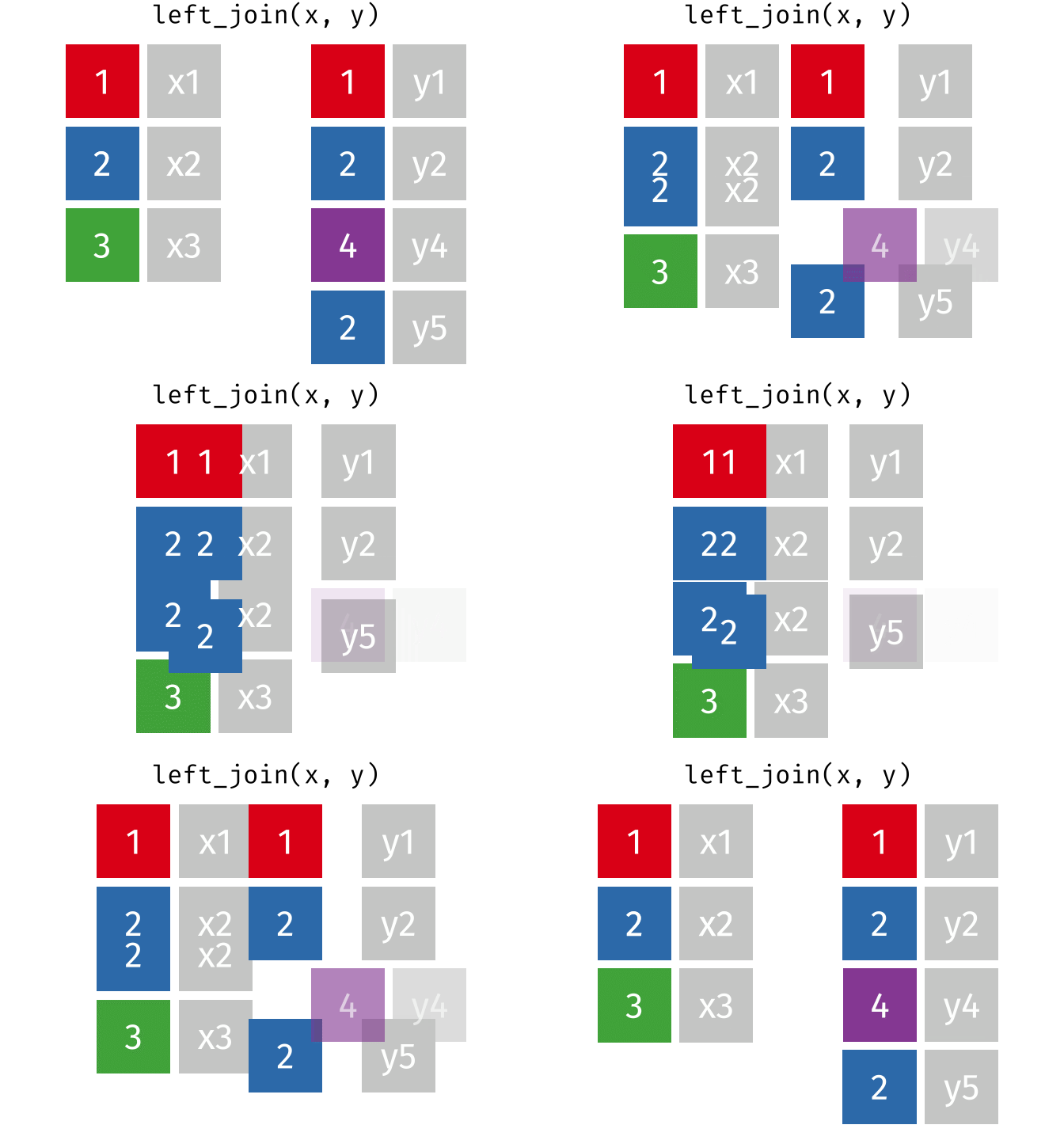
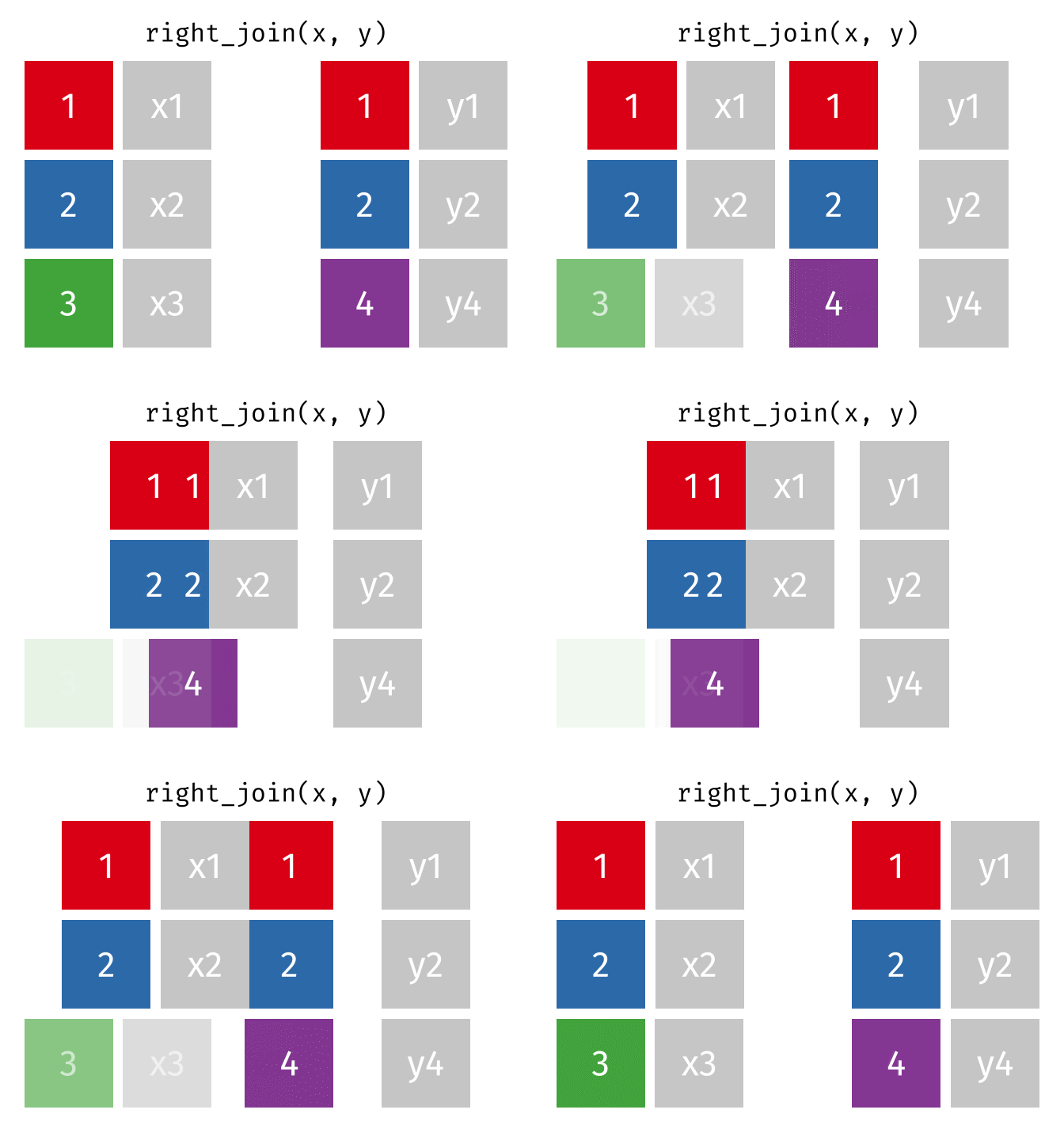
Joining tables

  • To join tables, we use the primary key in one table and the foreign key in another table.
  • In a relational model, a database has referential integrity if all relations between tables are valid. E.g.,
    • All primary key values must be unique and not missing.
    • Each foreign key value must have a corresponding primary key value.
  • In a relational model, normalization aims to keep data organization as clean and simple as possible by avoiding redundant data entries.

Equality (equi) joins in dplyr

  • Natural join is a special case of equality join where the join is performed on all columns with the same name in both tables.
  • In dplyr, you can use by = NULL (default) to perform a natural join.

Cardinality in data modelling

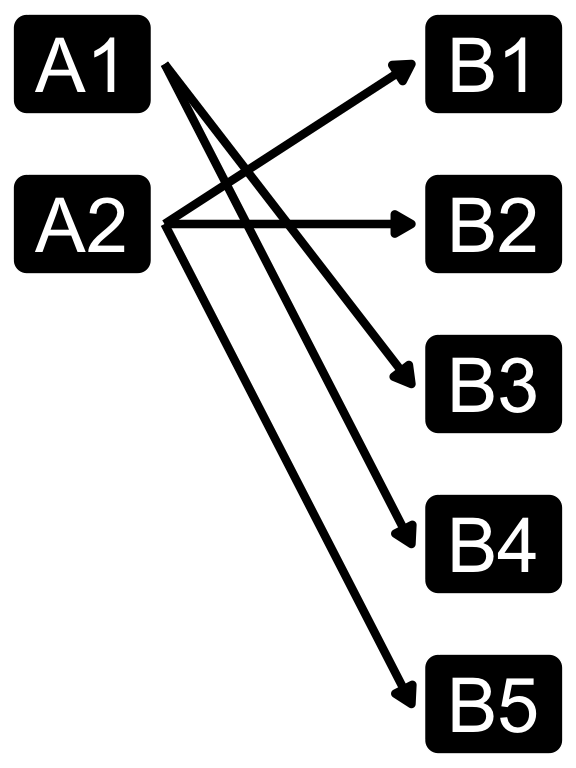
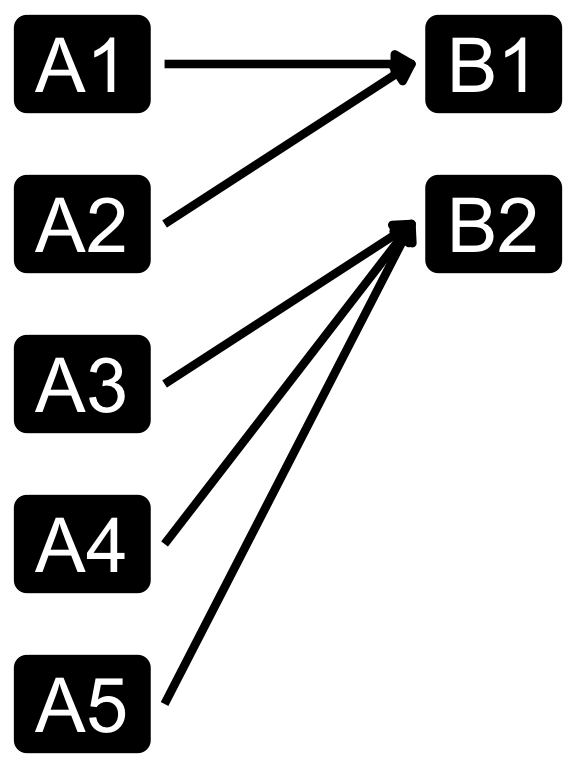
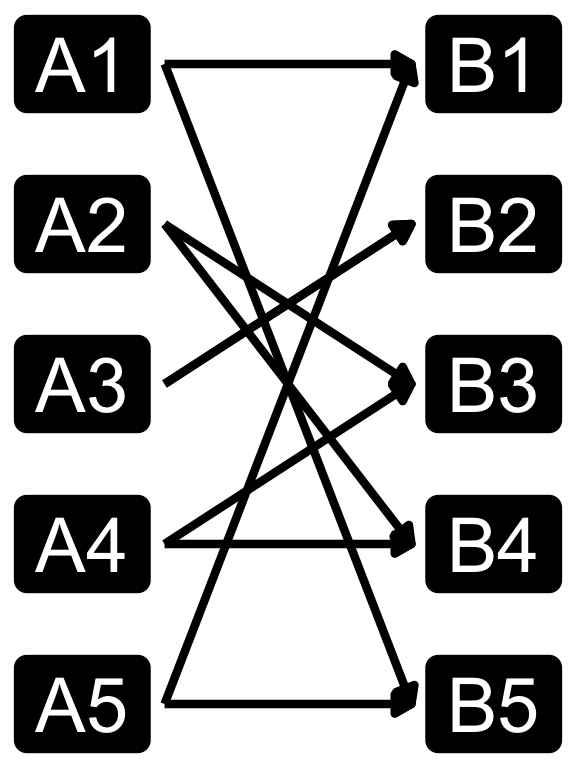
  • The relationship between the two tables can be categorized into four types:
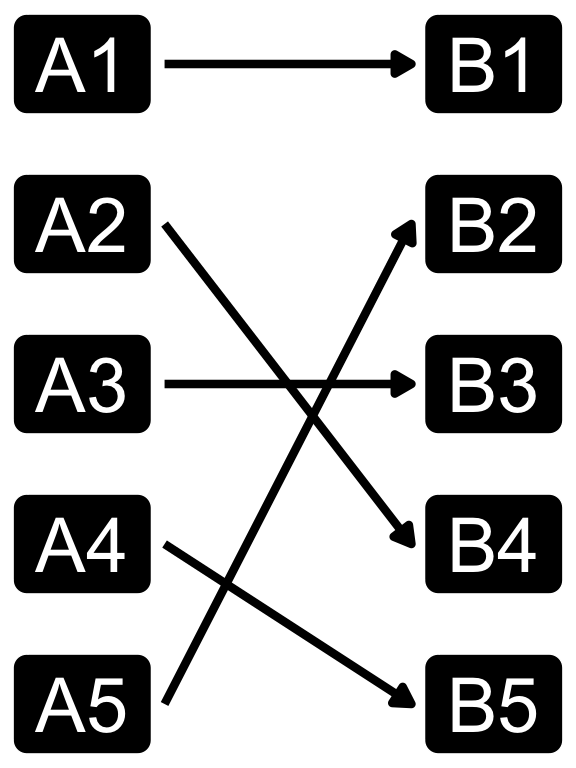
  • You can specify relationshp in dplyr joins using the relationship argument, which can be set to “one-to-one”, “one-to-many”, “many-to-one”, or “many-to-many”.
  • Note that relationship is not a property of the data, but rather of the relationship itself.

Challenge 2022 election result in the ACT

enrol2022: ACT voter enrolment in 2022
name enrol
BEAN 109557
CANBERRA 102196
FENNER 102576
elec2022: ACT election results in 2022
division party votes
Bean AUP 2722
Bean LP 29223
Bean GAP 929
Bean LDP 2540
Bean GRN 12168
Bean UAPP 2227
Bean ALP 35447
Bean 5043
Bean IND 7683
Canberra AUP 1784
Canberra GRN 20144
Canberra 1904
Canberra UAPP 1361
Canberra LP 24063
Canberra ALP 34989
Canberra IND 4062
Fenner 2669
Fenner ALP 38864
Fenner UAPP 3529
Fenner GRN 12492
Fenner LP 30025
Fenner AUP 1723
ACT election results in 2022 with enrolment
division party votes enrol perc
BEAN AUP 2722 109557 2.5
BEAN LP 29223 109557 26.7
BEAN GAP 929 109557 0.8
BEAN LDP 2540 109557 2.3
BEAN GRN 12168 109557 11.1
BEAN UAPP 2227 109557 2.0
BEAN ALP 35447 109557 32.4
BEAN 5043 109557 4.6
BEAN IND 7683 109557 7.0
CANBERRA AUP 1784 102196 1.7
CANBERRA GRN 20144 102196 19.7
CANBERRA 1904 102196 1.9
CANBERRA UAPP 1361 102196 1.3
CANBERRA LP 24063 102196 23.5
CANBERRA ALP 34989 102196 34.2
CANBERRA IND 4062 102196 4.0
FENNER 2669 102576 2.6
FENNER ALP 38864 102576 37.9
FENNER UAPP 3529 102576 3.4
FENNER GRN 12492 102576 12.2
FENNER LP 30025 102576 29.3
FENNER AUP 1723 102576 1.7

Inequality (non-equi) joins in dplyr

patients: Patient appointment data
id name date
1 Alice 2021-11-01
1 Alice 2022-01-01
2 Bob 2022-02-15
3 Charlie 2022-03-10


medications: Medication prescription data
patient_id name start end
1 Aspirin 2021-12-01 2022-01-31
1 Tylenol 2022-02-01 2022-02-28
2 Ibuprofen 2022-02-20 2022-03-15
3 Amoxicillin 2022-01-15 2022-02-28
3 Vitamin C 2022-04-01 2022-04-30


Overlap (interval) joins in dplyr

Genomic data often involves intervals and we may want to join two datasets based on whether the intervals overlap.

segments: Genomic segments
id chr start end
1 chr1 140 150
2 chr2 210 240
3 chr2 380 415
4 chr1 230 280
reference: Genomic reference intervals
id chr start end
1 chr1 100 150
2 chr1 200 250
3 chr2 300 399
4 chr2 415 450

Summary

  • Relational data consists of multiple, linked tables.
  • Primary keys uniquely identify each record in a table.
  • A foreign key is required to join tables together.
  • A key can be simple (one column) or compound (multiple columns).
  • Cardinality describes the relationship between tables (one-to-one, one-to-many, many-to-one, or many-to-many) which can be used to ensure data integrity.